
Gameplay
Teen Patti Rules for Beginners: Card Rankings, Blind vs Seen, and Show Rules
Classic Teen Patti uses three cards per player, a central pot, and a choice on each turn: continue under the table’s contribution rules or fold. You win by being the last player remaining or by holding the stronger hand in an eligible final Show.
Scope: worked examples of general Teen Patti rules, not rules tested in a specific Star app. Check your table’s rules. Sources & limitations
Teaching diagram — not an app screenshot.
The basic structure is compact, but several details need attention. Blind and Seen players may pay different amounts. A high individual card does not automatically beat a stronger hand category. A Show is not the same as a Sideshow, and exact ties are not always split.
This reference covers the classic game without jokers. Examples use practice tokens with no cash value. Where tables differ, the rule is identified as a convention to confirm rather than a universal app feature.
The Setup: Deck, Boot, and Deal
Use a standard fifty-two-card deck and remove printed jokers. Choose a dealer, a turn direction, and a starting contribution called the boot. Everyone participating places the boot into the central pot before receiving three face-down cards.
For example, five players contributing two tokens each create a ten-token opening pot. Those tokens are no longer part of the players’ available stacks. They remain in the pot even if a player folds immediately.
In the classic game, players do not draw replacements or use shared community cards. Agree any maximum contribution, pot cap, Blind-turn limit, and short-stack procedure before dealing. A pot limit is incomplete unless everyone also knows what happens when it is reached.
Teen Patti Hand Rankings, Highest to Lowest
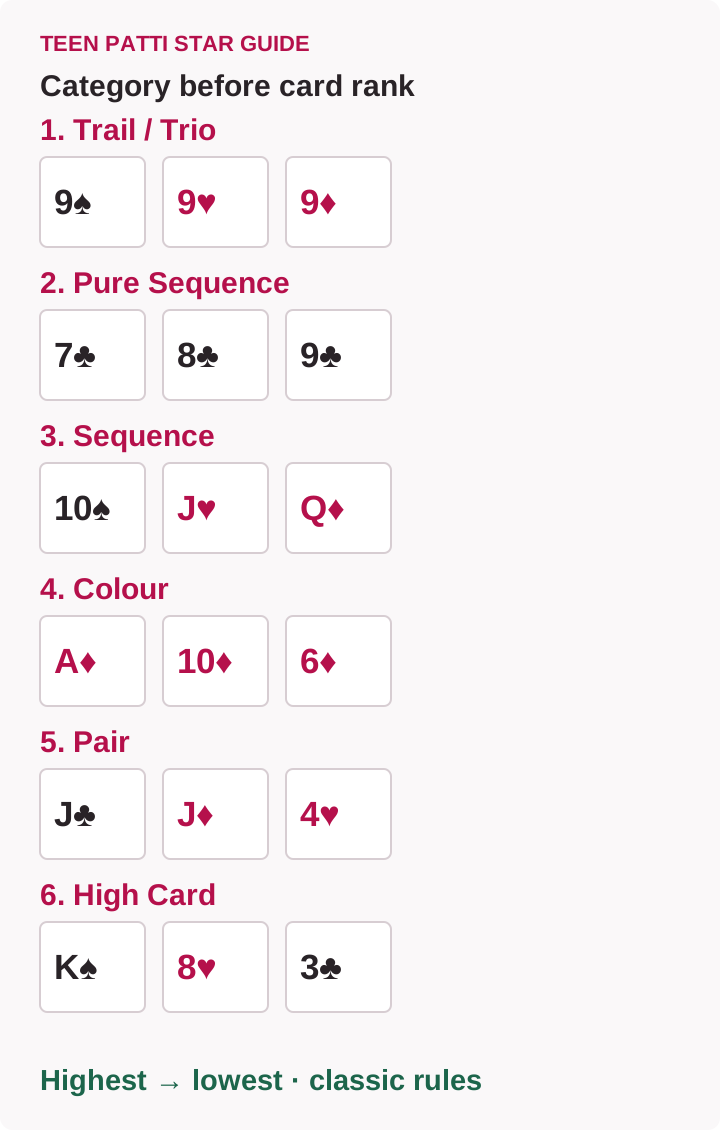
| Order | Hand | Example | Defining feature |
|---|---|---|---|
| 1 | Trail or Trio | 9♠ 9♥ 9♦ | Three equal ranks |
| 2 | Pure Sequence | 7♣ 8♣ 9♣ | Consecutive ranks, one suit |
| 3 | Sequence | 10♠ J♥ Q♦ | Consecutive ranks, mixed suits |
| 4 | Colour | A♦ 10♦ 6♦ | One suit, not consecutive |
| 5 | Pair | J♣ J♦ 4♥ | Two equal ranks |
| 6 | High Card | K♠ 8♥ 3♣ | None of the stronger categories |
1
- Hand
- Trail or Trio
- Example
- 9♠ 9♥ 9♦
- Defining feature
- Three equal ranks
2
- Hand
- Pure Sequence
- Example
- 7♣ 8♣ 9♣
- Defining feature
- Consecutive ranks, one suit
3
- Hand
- Sequence
- Example
- 10♠ J♥ Q♦
- Defining feature
- Consecutive ranks, mixed suits
4
- Hand
- Colour
- Example
- A♦ 10♦ 6♦
- Defining feature
- One suit, not consecutive
5
- Hand
- Pair
- Example
- J♣ J♦ 4♥
- Defining feature
- Two equal ranks
6
- Hand
- High Card
- Example
- K♠ 8♥ 3♣
- Defining feature
- None of the stronger categories
Classify first, compare second. A low Trail outranks a high Pure Sequence. A Sequence outranks a Colour even when the Colour contains an ace. This standard category order also appears in the Pagat Teen Patti rules.
“Colour” means a matching suit, not simply three red or three black cards. Hearts and diamonds are different suits. Three red cards do not form a Colour unless all three are hearts or all three are diamonds.
Comparing Two Hands in the Same Category
Trail and Pair Comparisons
For Trails, compare the repeated rank. Three queens beat three jacks. For pairs, compare the pair before considering the unpaired card, or kicker.
Take 7♠, 7♥, A♦ against 8♣, 8♦, 2♥. The eights win because the pair rank decides the comparison. The ace is irrelevant once the pair of sevens loses that first check.
Now compare J♠, J♥, 9♦ with J♣, J♦, 6♠. The paired rank matches, so compare kickers. Nine beats six. Both example hands can exist in one deck, and neither reuses a physical card.
Colour and High-Card Comparisons
Order each hand from highest to lowest, then compare the first differing position. Do not add the card values together.
For example, A♠, 10♠, 4♠ beats A♥, 9♥, 8♥. The aces tie, but ten beats nine at the second position. The lower final card does not matter because the result has already been decided.
For high cards, K♣, J♦, 5♥ beats K♦, 10♣, 9♠ using the same method. Again, a larger total is not the test. Suits do not ordinarily provide a ranking advantage unless a special house rule says otherwise.
A-2-3 and A-K-Q: Confirm the Sequence Convention
Do not assume every table ranks ace sequences identically. Some put A-2-3 above A-K-Q; others put A-K-Q first. A rule card or app help screen should settle this before it affects a pot.
The difference concerns the order of otherwise valid sequences. It does not mean an ace can bridge any gap. K-A-2 is not a normal classic sequence. Likewise, Q-A-2 does not become consecutive because it includes an ace.
For early practice, use examples such as 6-7-8 and 9-10-J. That lets everyone learn category comparison before adding the ace exception. Later, write the chosen full sequence order beside the table.
Blind vs Seen: Information and Contribution
A Blind player has not looked at their cards. A Seen player has viewed them. Once you look, you cannot regain Blind status by putting the cards face down again.
One common contribution convention uses a current base stake, written here as S. A Blind contribution can be S or up to twice S; a Seen contribution can be twice S or up to four times S. After a Blind payment, the new base is that payment. After a Seen payment, the new base is half that payment. Published traditional rules describe this convention, but individual tables may differ. See the compact Pagat rules reference.
Here is a worked example with an opening base of four tokens:
| Action | Tokens added | Base afterward | Next minimum Blind / Seen |
|---|---|---|---|
| Blind player pays the minimum | 4 | 4 | 4 / 8 |
| Seen player pays the minimum | 8 | 4 | 4 / 8 |
| Blind player raises | 8 | 8 | 8 / 16 |
| Seen player pays the minimum | 16 | 8 | 8 / 16 |
Blind player pays the minimum
- Tokens added
- 4
- Base afterward
- 4
- Next minimum Blind / Seen
- 4 / 8
Seen player pays the minimum
- Tokens added
- 8
- Base afterward
- 4
- Next minimum Blind / Seen
- 4 / 8
Blind player raises
- Tokens added
- 8
- Base afterward
- 8
- Next minimum Blind / Seen
- 8 / 16
Seen player pays the minimum
- Tokens added
- 16
- Base afterward
- 8
- Next minimum Blind / Seen
- 8 / 16
The important distinction is between the amount just paid and the base used for the next player. A Seen payment of eight does not automatically mean the next Blind player owes eight. Under this example, the base remains four.
What Pack Means
Packing is folding out of the current round. You pay nothing further for that turn, but your previous contributions stay in the pot. You cannot return to the same deal simply because later action looks attractive.
Folded cards should remain separate from active hands and unrevealed unless the agreed rules say otherwise. Announcing your cards can give one remaining player information that another did not have.
Packing is also different from leaving an app entirely. A disconnect may trigger an automatic action, a timer, or another room-specific process. Do not assume closing the screen cancels a contribution or refunds the boot.
Show Rules: Who Can Ask?
A classic final Show is for the last two active players. Under a common convention, a Blind requester pays the base stake, whether the opponent is Blind or Seen. If both are Seen, the requester pays twice the base. A Seen player cannot demand a Show against a Blind opponent under that convention.
Confirm the actual room’s fee and eligibility before applying these rules. Also establish the tie outcome: some traditional tables make the requester lose an exact tie, while other formats specify a split or another result.
For example, two mixed-suit high-card hands containing K-9-4 have equal rank when suits have no priority. That does not automatically tell you who receives the pot. The hand comparison says “equal”; the table’s tie rule determines the outcome.
Show and Sideshow Are Different
A Sideshow is a permitted comparison between eligible players while the round can continue. It is commonly associated with Seen players and a request to the preceding eligible player, who may be able to refuse. Conditions vary, including whether all remaining players must be Seen.
If accepted, the weaker participant normally folds; this is not automatically an award of the whole pot. A final Show, by contrast, settles the last two hands. Agree whether Sideshows are enabled at all before teaching the feature to beginners.
Table Rules Worth Writing Down
A useful rule card records the boot, stake range, ace-sequence order, Show fee, exact-tie rule, and any Blind-turn limit. Add the pot-cap procedure and whether Sideshows are allowed.
This avoids arguments based on memory. Saying “we play normal rules” does not resolve differences between two people who learned different versions. A one-minute agreement before the deal is more useful than debating a disputed hand afterward.
Frequently Asked Questions
Does a Colour beat a Sequence?
Not in the standard classic hierarchy used here. A mixed-suit Sequence ranks above a Colour. Special variants must be checked separately.
Can I change my cards after seeing them?
Not in classic Teen Patti. Looking changes your Seen status, not the cards in your hand. Replacement-card mechanics belong to separately defined variants.
Must every round finish with a Show?
No. If all opponents fold, the last active player wins without a final hand comparison.
Final Thoughts
Learn the six categories, compare equal categories carefully, and distinguish your hand’s strength from your eligibility to request a Show. The remaining details belong on a clearly agreed table rule card.
Practice with tokens that cannot be bought back or redeemed. Real-money stakes are unnecessary for learning, and understanding the rules does not guarantee a winning result. Set a session limit and stop when play is no longer enjoyable.
Sources & scope
Public sources checked on 15 September 2026. Examples are illustrative; no hands-on device test of a specific app was performed. Table and platform rules may differ.
Related guides
Gameplay
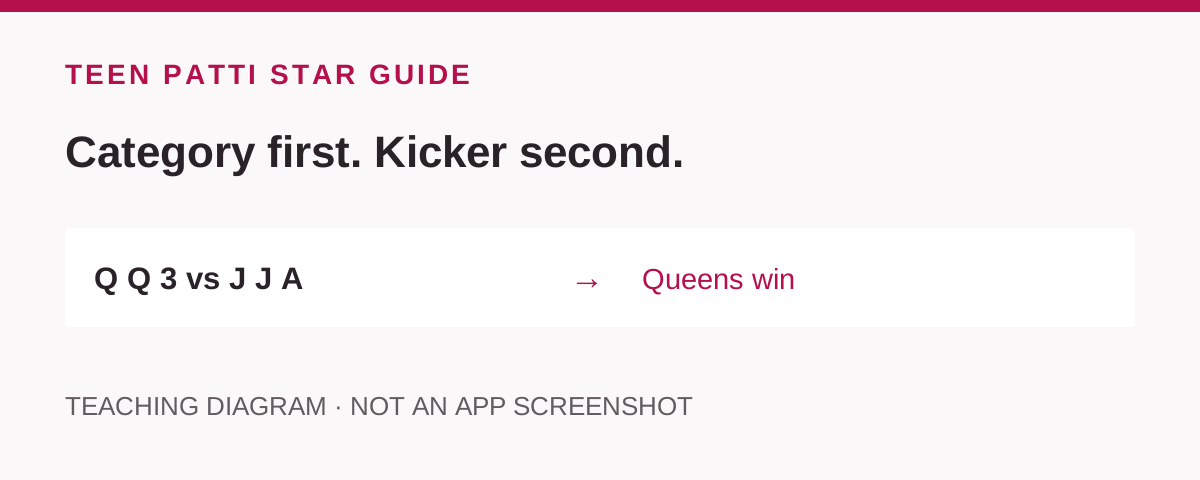
Teen Patti Hand Rankings: Examples and Tie-Breaks
See all six hand categories, work through pair and colour comparisons, and check the A-2-3 and exact-tie convention before playing.
Gameplay
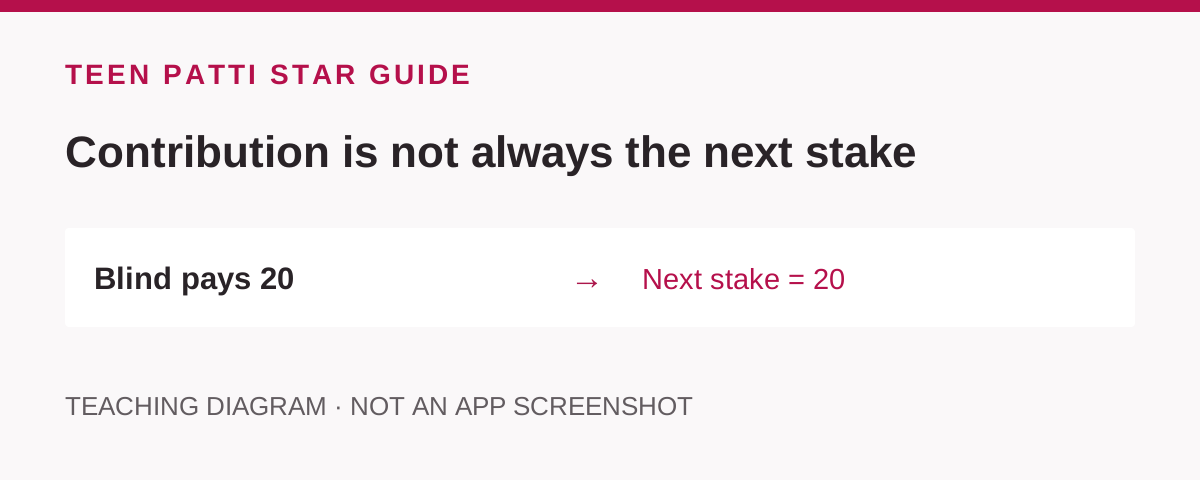
Blind vs Seen in Teen Patti: Rules and a Worked Round
Compare Blind and Seen, follow the changing current stake, and distinguish final Show from Sideshow using practice chips.
Gameplay
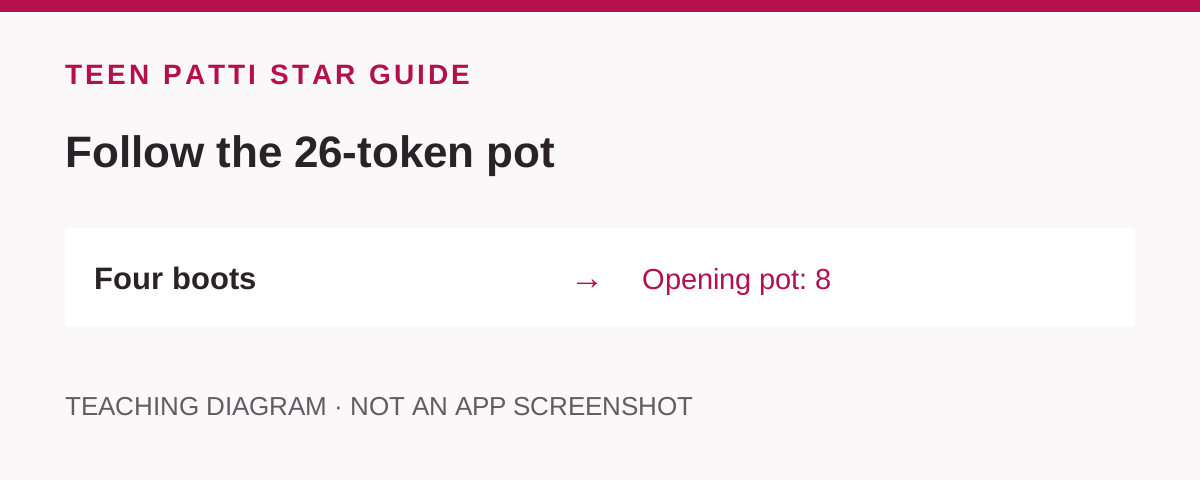
How to Play Teen Patti: Step-by-Step Beginner’s Guide with Hand Examples
Follow a complete Teen Patti practice round, from the boot and deal to Blind turns, folding, a final Show, and checking the token totals.